

HECHT AG and Fraunhofer ITWM Further Advance Quality Control
55 years of measurement technology
meets AI expertise
The demands on quality control in the furniture industry are changing rapidly. Batch size 1, rising quality expectations, and an increasing shortage of skilled labor call for new solutions. At the same time, Artificial Intelligence is opening up possibilities in industrial image processing that were virtually unimaginable just a few years ago. With 55 years of experience, HECHT AG develops measurement and inspection solutions for the furniture industry.
In order to systematically transfer new technologies into practical applications, the company has been working closely with the Fraunhofer Institute for Industrial Mathematics ITWM for many years. möbelfertigung spoke with Michael Hettich, CEO of HECHT AG, and Markus Rauhut, Head of the “Image Processing and Inspection Systems” department at Fraunhofer ITWM, about their joint collaboration, current challenges, and the future of quality control.
“Technology must create real customer value.”
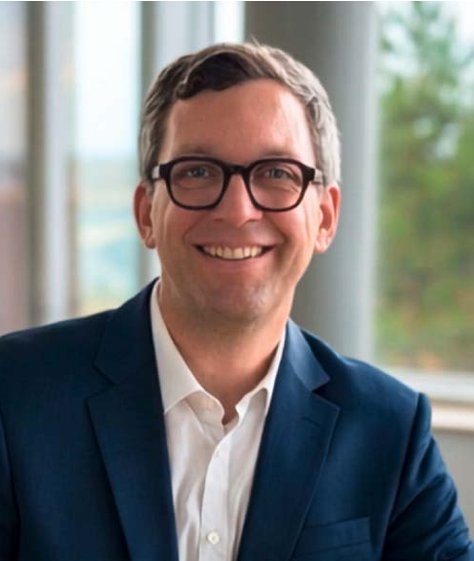
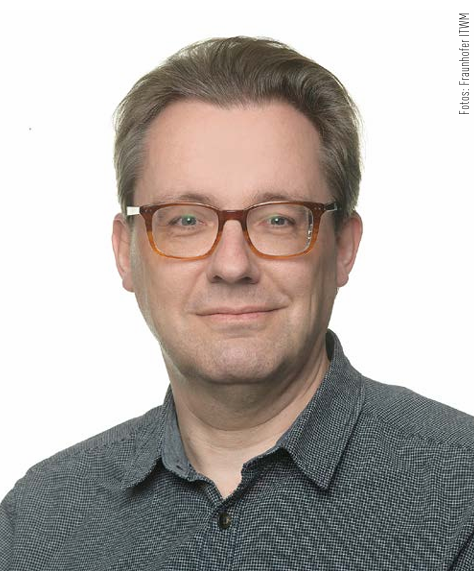
The interview with Michael Hettich and Markus Rauhut, conducted by Tino Egger
möbelfertigung: Mr. Hettich, Mr. Rauhut, you have been working together for many years. What makes this partnership so special?
Michael Hettich: Our first joint collaboration was over ten years ago. Right from the start, we were convinced by the fact that we share the same view on innovation. The focus is not on what is technically possible, but on what concrete benefit the customer derives from it.
We have been dealing with the requirements of the furniture industry for several decades. We know the production processes, the workflows, and the challenges of our customers inside out. This industry understanding forms the foundation of every new development to this day. That is precisely why, together with Fraunhofer ITWM, we pursue a very practice-oriented approach: new technologies must improve everyday production and offer real added value to our customers.
Markus Rauhut: That is mutual. HECHT brings an exceptionally deep understanding of the furniture industry to the table. This knowledge is enormously valuable to us as a research institute. That is why we do not view ourselves as a traditional research service provider. Both teams work together as equals. HECHT knows the applications and requirements of furniture manufacturers down to the last detail. We complement this knowledge with our expertise in image processing, Artificial Intelligence, and mathematical methods. Only this combination enables solutions that are scientifically sound and, at the same time, ready for industrial deployment.
“Research creates added value when it solves problems.”
möbelfertigung: HECHT AG has been developing solutions for the furniture industry for over five decades. What role does this experience play today—especially against the backdrop of rapid developments in Artificial Intelligence?
Michael Hettich: Our greatest strength is our understanding of the industry. Furniture manufacturing today is among the most demanding production environments of all. A wide variety of components, materials, decors, and machining operations run through the exact same production lines in very short timeframes. Hardly any workpiece is like another. Of course, technology is constantly evolving. Artificial Intelligence in particular opens up possibilities today that we didn’t have a few years ago. Nevertheless, our core principle remains unchanged: technology must support people and must never be an end in itself.
We could constantly integrate more sensors, cameras, and features. However, the crucial factor is that a system remains manageable for the operator. The best technology is useless if it isn’t used in day-to-day production. That is why we deliberately look for solutions that offer the maximum benefit without creating unnecessary complexity. This is precisely where Fraunhofer ITWM complements us ideally.
möbelfertigung: Mr. Rauhut, from your perspective, where lies the specific strength of this collaboration?
Markus Rauhut: Research alone doesn’t solve a problem in production. Likewise, industry knowledge alone isn’t enough when new technologies enter the mix. That is why both sides benefit from one another. Our team consists of specialists in Artificial Intelligence, image processing, and mathematical methods. At the same time, through our close collaboration with HECHT, we learn the requirements of the furniture industry down to the last detail. This interplay ensures that we develop methods that don’t just work in the lab, but also prove themselves in real-world manufacturing later on. For us, that is precisely what successful applied research is all about.
möbelfertigung: Where do you currently see the biggest challenges in quality control?
Michael Hettich: The biggest challenge is the immense variety of variants. Today, the furniture industry mostly produces in batch size 1. Different sizes, materials, surfaces, and machining operations change constantly. At the same time, quality requirements are continuously rising. Added to this is the shortage of skilled workers. Many companies still rely on experienced employees in quality control today. This knowledge is extremely valuable, but at the same time, it is becoming increasingly difficult to find qualified personnel.
“Quality stems from experience and the right tools.”
Therefore, inspection systems must become even more flexible in the future. At the same time, they must not become more complicated. Our goal is not to offer as many features as possible, but to create the maximum possible benefit for the user. Sometimes, a practical solution that reliably covers the vast majority of tasks makes more sense than a maximally complex system.
möbelfertigung: What role does Artificial Intelligence play in this?
Markus Rauhut: AI helps us primarily where classical image processing reaches its limits. Natural materials or modern decors in particular often differ only in the finest structures. In the past, this frequently led to so-called false defects (pseudo-errors)—areas that were incorrectly flagged as defects by the system. Modern AI procedures can learn such subtle differences significantly better. As a result, the number of unnecessary rejects drops, and new decors can be integrated much more easily. However, that doesn’t mean AI replaces humans. Rather, it supports making quality decisions more reliable and reproducible.
möbelfertigung: Mr. Hettich, what is the concrete advantage of this collaboration for furniture manufacturers?
Michael Hettich: We combine two worlds. On the one hand, there is our decades of experience in the furniture industry and our knowledge of how to reliably integrate solutions into production processes. On the other hand, Fraunhofer ITWM brings top-tier scientific expertise in image processing and Artificial Intelligence.
This allows us to tackle challenges for which there was previously no economically viable solution. The starting point is almost always the same: a furniture manufacturer approaches us with a specific challenge. The trigger for new developments is always the customer. Together, we then evaluate how this task can be solved in a technically sensible way. Our goal is not to build maximally complex systems, but solutions that offer our customers genuine, lasting added value.
möbelfertigung: Is your collaboration project-based or long-term?
Michael Hettich: Clearly long-term. Naturally, we repeatedly work on individual development projects. But behind that lies a strategic partnership that evolves continuously. Not every customer requirement automatically leads to a new product. Sometimes we also determine together that a solution makes no sense economically or technically. However, it is just as important to evaluate new ideas early on and develop them further where they create the greatest benefit for our customers.
Markus Rauhut: That is precisely what makes the collaboration so special from Fraunhofer ITWM’s perspective as well. Research unfolds its greatest utility when it answers specific industrial questions. That is why we don’t develop methods for their own sake. Our goal is to create technologies that prove themselves in real production processes and support companies over the long term.
“AI must prove itself in daily production.”
möbelfertigung: Which developments will shape quality control in the furniture industry in the future?
Markus Rauhut: Artificial Intelligence will continue to establish itself in the coming years while simultaneously becoming easier to use. One focus is on adapting systems more quickly to new materials, decors, or production conditions. At the same time, we are working on further reducing the training effort for AI systems. New approaches, such as using synthetic training data, open up interesting opportunities here. As a result, new applications can be realized more economically in the future. Ultimately, though, it’s not about having as much AI as possible, but about providing robust and reliable systems that permanently improve daily production.
möbelfertigung: Mr. Hettich, what role will quality control play in the production of the future?
Michael Hettich: Quality control will become an even stronger part of the actual production process in the future. Errors shouldn’t just be detected at the end, but ideally right where they originate. At the same time, the skilled labor shortage will continue to concern many companies. Automated measurement and inspection systems can support experienced employees in keeping their processes stable and reproducible. This is explicitly not about replacing people. Rather, we want to combine their know-how with modern technology. Quality doesn’t come from technology alone—it arises from the interplay of experience, process understanding, and the right tools.
möbelfertigung: What advice would you give to companies that have so far engaged very little with AI-supported quality control?
Michael Hettich: I would recommend everyone to engage with the possibilities early on. Not every company immediately needs comprehensive inline inspection. But every company should understand which technologies are available today and what benefits they can offer to their own processes. Above all, employees should be involved right from the start. They know the quality requirements from their daily work and possess an immense wealth of experience. Modern systems can capture this exact knowledge and make it permanently available.
Markus Rauhut: I would add: Just get started. Many companies still associate Artificial Intelligence with high barriers to entry. However, our experience shows that a step-by-step approach works best.